

How I’m Using a Continuous Glucose Monitor to Optimise My Running Training
Initial results and recommendations

Continuous Glucose Monitors are a piece of technology developed to help monitor blood glucose levels in people with diabetes. Allowing them to ensure that they are in an appropriate range so as to avoid hypoglycemia or hyperglycemia.
You can probably visualise what I’m talking about, those little white circles that people wear on the back of their upper arms.
If you can’t, here’s a photo of me wearing one.
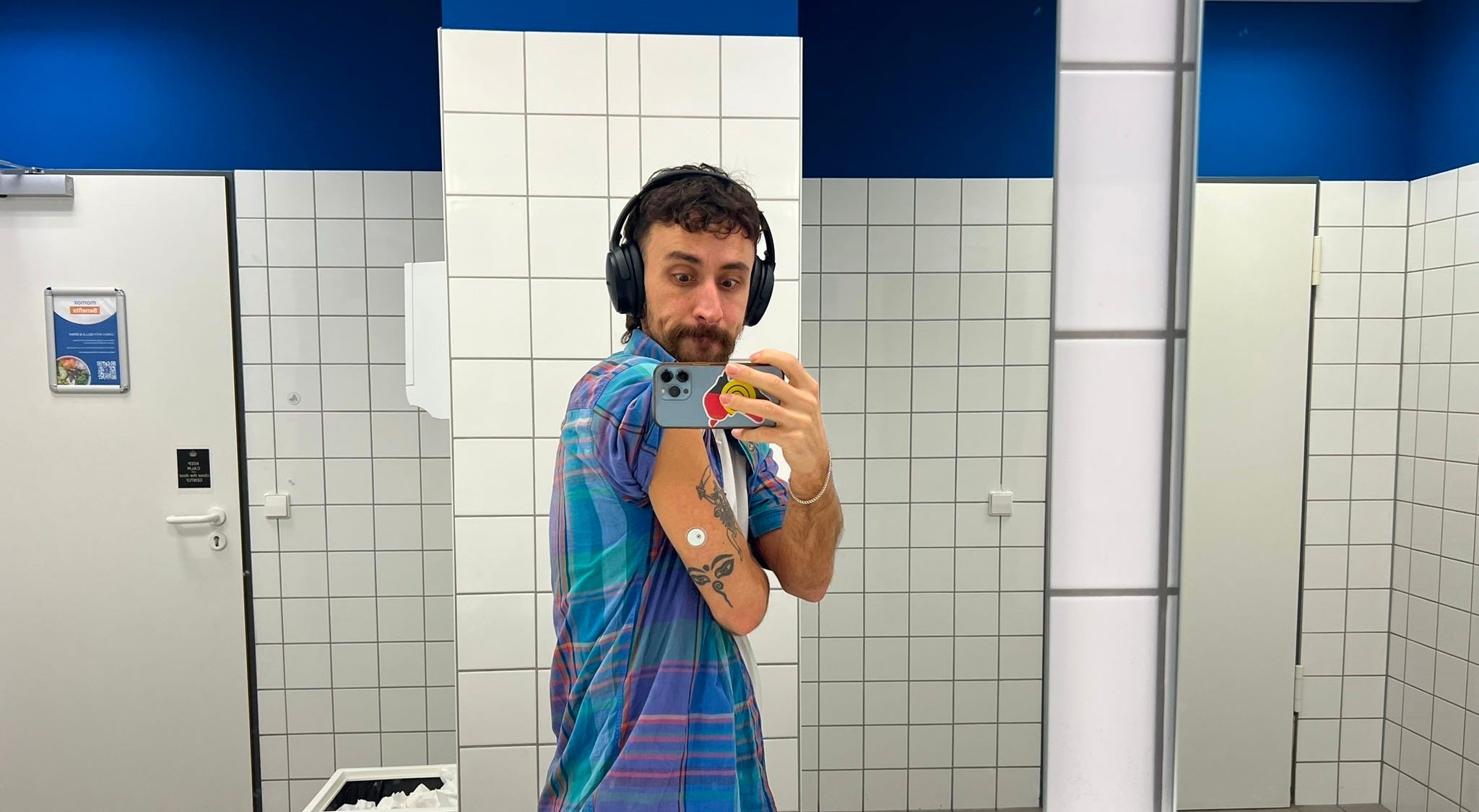
In recent years, their application has diversified to performance sports. This is best exemplified by the World Marathon Majors (7 of the most prestigious global marathons) being sponsored by Abbott - a global leader in diabetes care.
Here’s an example - this study used a nutritional approach to evaluate the association of competition results with carbohydrate intake and blood glucose control during a 100-mile ultramarathon.
The results indicate the importance of maintaining glucose homeostasis during ultra-endurance competitions. Glucose monitoring during the race and the training shows how dietary supplementation benefits ultra-endurance performance.
The reason that I’m writing about them today is because of a message that I saw in a running WhatsApp group that I’m part of that read:
We are currently preparing an exciting study that investigates the use of artificial intelligence (AI) in data-driven training optimisation - especially in competition preparation.
To lay the foundations for our study, we are conducting qualitative interviews with endurance athletes like you. Have you taken part in a half marathon or marathon in the last 12 months - or are you planning to do so in the next 6 months?
As a thank you, you will gain insights into an innovative research project - and perhaps a few new perspectives for your own training. 😊
We look forward to your participation and your valuable input!
I jumped at the opportunity to join in on a study to better understand the true effect that food has on my body and to learn a little bit more about nutrition. So I signed up for an interview and spoke to the facilitator a couple of weeks later. I spoke at length about my training and goals for the Dresden Half Marathon which I ran in October and the Rome Marathon which I’m going to run in March.
Fast forward another month and we had another call to hash out the details of what would be required as part of this study.
In short, it would require me to track my nutritional intake (read as: food) and activity (read as: running).
As always, I saw the opportunity to dive a little bit deeper into this with my words and decided I would keep my own diary of the events.
Continue reading to uncover my initial findings from this study and how it ended in disaster.
Day 1: Monday 27th January 2025
Initial reading 4.4mmol/L
Trepidation to put the monitor on. Worried about the pain caused by the applicator? Hurt as much, if not less than a traditional needle. However, some discomfort when lying down, which I’m sure I’ll get used to.
Probably most anxious about logging my food. I claim to be a healthy vegan, but often find myself going for convenience than healthy snacks.
My goal for this test is to understand better how the things that I put into my body affect me.
The actual purpose of this study is to determine the impact of exercising with a stable glucose level in the lead-up to exercise, and how to manufacture this through food intake and timings.
Rice for lunch, pasta for dinner. Grateful that the study didn’t start any sooner, as I’m now earning money again and not trying to buy groceries on a shoestring… despite the previous sentence. My servings today were gargantuan (as usual).
I didn’t have any snacks in today and I’m curious how much of an impact wearing this will impact my habits. The packet of sweets I bought after my run is surprisingly still unopened in my drawer.
But on to today’s run. Much much later than I anticipated. However, I cannot complain about a second 9-hour sleep in just 3 days. Maybe I’m starting to realise this recovery thing does make sense.
I managed to eke out 9km before the rain started and directed me to the supermarket instead of running the extra km. A single km isn’t going to bite me when I’ll run ~100 this week.
My legs were tight. Specifically my calves. I could feel them all day. Though hearing from a friend, it sounded like I didn’t have the worst of it after our race yesterday.
A lot of my easy runs recently have been 4:30-4:40 pace. Today I averaged 4:53, meaning that a good chunk of my run was classed as ‘active recovery’, rather than adding any form of aerobic fitness or maintenance thereof. Though if I were to pick any day for that to happen - this one seemed appropriate.
Activity Data:
Activity Type: Easy Run
Average Heart Rate: 138 bpm
Maximum Heart Rate: 150 bpm
Duration: 45:00
Average Pace: 4:53
Rate of Perceived Effort: 3/10
Happiness: 3/5
I’m grateful to have the experience of getting to test a sensor like this out. My girlfriend is diabetic, so I was cautious about not diving into this study without her approval; for fear of being insensitive.
If anything, I hope that it will bring us closer together as I begin to catch the slightest glimpse of what living with this disease is like. Where eating and doing mental equations about carbohydrates never exits your mind.
But more on that later. I announced that I would probably drink less tea and coffee with milk - as drinking each black meant I didn’t need to log them. However, she came through with sage advice as always - reminding me that it’s in my own best interest not to change my habits. Allowing me to see the effects on my body of my natural consumption.
My average glucose level for the day has been 5.3mmol/L. Whether that is good or not, I don’t know. I have a feeling it is, given it sits squarely within the green zone on the monitoring app; but I’ll find out more information during our first check-in on Saturday.
More to come…
Day 2: Tuesday 28th January 2025
Wake up reading 4.9mmol/L
Overnight I can see that my average reading was ~4.8mmol/L. I guess this is good. I was slightly concerned about sending over my results to the study facilitator last night as I was at around 7, however, this had dropped to a normal level by the time I actually dozed off.
Thankfully, I didn’t have to exercise this morning. However, I did have a few firsts. My glucose level dropped below 4 after breakfast and as I’m writing this at 13:49 it is again sitting at 3.9mmol/L. It appears that food gives my blood glucose level a large spike in the immediate aftermath, however, my body has overcorrected this twice to put me below the standard range of 4-10 mmol/L. It’s interesting to see the effect that food is having on my body. I will see how much attention I can pay whilst exercising. Today’s session of 1km repeats may not be as easy to measure - perhaps in the minute break I’ll have between sessions. Yesterday, with the study facilitator, we discussed keeping a closer eye on my glucose levels during longer runs and potentially delaying the consumption of energy gels until my body shows that it needs them; instead of my best-known practice of one every ~35 minutes.
Tracking my food intake also isn’t as arduous as when I’ve done it in MyFitnessPal in the past as I don’t have to estimate the exact portion size of the 7 different vegetables I put in each meal, or figure out how much rice/pasta/oats I’m using without a set of scales. However, let’s wait a few more days to make a judgment on that.
One thing that I am noticing from logging my food is that I am often still hungry despite the large portion sizes. I’m asked to track how hungry I am before each meal and how full I am afterwards. I think all of my portions will be considered ‘large’, but I don’t very often feel full. However, I have a feeling this is a mental state rather than a physical one. Will keep an eye on this one.
I recommended, perhaps, including sleep as a factor to include when logging an activity, because I know that this directly impacts my satisfaction and rate of perceived effort (both listed data points) before, during, and after activities.
Another piece of feedback I would give would be to see all of the data I have already input into the survey. To make sure that I have not missed any meals or activities, but also to keep tabs on what has come before. I track my activity on Strava via integration with Garmin but never keep tabs on my food intake.
The caveat to this is that I feel like it could lead to some bias. Although, I’m not sure which one.
Crash for 60 minutes after food - need to exercise before this.
Activity Data:
Activity Type: Intervals
Repetitions: 5
Interval Duration: 1km WU // 5x1km @ 3:20 // 2.5km CD
Average Heart Rate: 147
Maximum Heart Rate: 181
Duration: 39:30
Average Pace: 3:23
Rate of Perceived Effort: 10/10
Satisfaction: 4/5
That session was hard work. My feedback for the study is that there should be an open comment box to give context to my subjective rankings.
This run was harder because my calves are still very tight from my PB (personal best) setting Half Marathon on Sunday. Also, due to the fact that I didn’t manage to eat before the session. Safe to say the apple and glass of multi-vitamin juice did little to fill my stomach before the session.
I went out wanting to push for 6x1 km @ 3:20 per km, however, I couldn’t hold on. I was grateful to have superstar Cyprien running on my shoulder to power me along. But as with the weekend, my pace started to wane a little as the repetitions went on. I decided to call it after 5 reps and do an extended cooldown.
I really noticed the difference in having a 60-second recovery vs the 90-second - or more likely 120-second recovery that I usually use. I guess this is why this session was meant to be at Threshold, rather than the max effort that I put into it. What can I say, I’m a sucker for trying to push myself that little bit harder.
After arriving home, I spoke to my girlfriend about the peaks and troughs I experienced after eating and exercising. Which I was quickly told not to call spikes, as my readings were all still within the required zone of 4-10 mmol/L.
Looks like I’ve still got a lot to learn. A colossal bowl of pasta and then some more filled the bottomless pit that is my stomach after the session.
I’m also grateful to be getting on top of my sleep schedule, with another 8-hour evening forecast - before getting up for 10km in the morning.
Day 3: Wednesday 29th January 2025
Will getting out of bed ever get easier?
I am grateful that my routine is slowly starting to take shape, in that I know which days I must run in the mornings vs which mornings it is simply a preference (which is always). Today, I had 10km on the menu. Monday, Wednesday, and Friday are my recovery days. With runs typically falling in intervals of 5 kilometres.
The weather hasn’t been so cold these past few days, and the days are now getting longer. However, that doesn’t stop me from being excited for the turn of the season and getting out of bed becomes easier.
This morning’s run wasn’t my favourite. But the theme of it was Showing Up.
Show up for yourself on the hard days, so that it becomes easier for you to do so on the easy days. It’s fine to get up when the sun is already beaming through windows without curtains, but doing so when there is resistance in the form of rain and darkness is another matter.
This morning was a slog. It wasn’t difficult by any stretch, in fact, my average pace of 4:52 was 1 second slower than it needed to be for the session to be in my Aerobic zone. Instead, today may only be chalked up as Active Recovery (again)… which is fine by me.
Activity Data:
Activity Type: Easy Run
Average Heart Rate: 144 bpm
Maximum Heart Rate: 158 bpm
Duration: 50:55
Average Pace: 4:52
Rate of Perceived Effort: 3/10
Satisfaction: 3/5
I have since had a massage at work. A perk of selling your soul to a corporation. The privilege of paying for a massage without leaving the comfort of the office. After obliging to the masseuse’s request to take my top off, I quickly asked if we could flip the script and massage my very tight legs.
The focus on my calves and hamstrings was heavenly, and far more beneficial than anything on my upper body or shoulders as probably all of my colleagues will ask for today.
For the first time in my life, I am starting to have some understanding of what food is doing to my body. As displayed to me in a format that I understand well - cold, hard data. It’s too early for me to make any conclusions, but it’s interesting to see the impact that food is having on my body. My girlfriend introduced the concept of high + low glycemic index foods on a call last night, but I need to take it one step at a time.
My hope now will be to understand the impact that the timing of food has on my performance, before moving on to the impact of specific food (groups).
Not so much to reflect on this eve. I get into bed knowing that my eating was sub-par, but that can’t be avoided when you have activities in the evening. Well, it can with better planning - but the tub of yoghurt I had before my German class at 5 didn’t quite tie me over.
A lesson in preparedness. I wonder what tomorrow will be?
Day 4: Thursday 30th January 2025
Before this study even began I had issues. My app store still being linked to the British market almost derailed us for starters. Instead of being able to share my data with the study facilitator, I am required to take screenshots each morning + evening.
This morning, however, I didn’t send anything over. Instead, I sent this image.
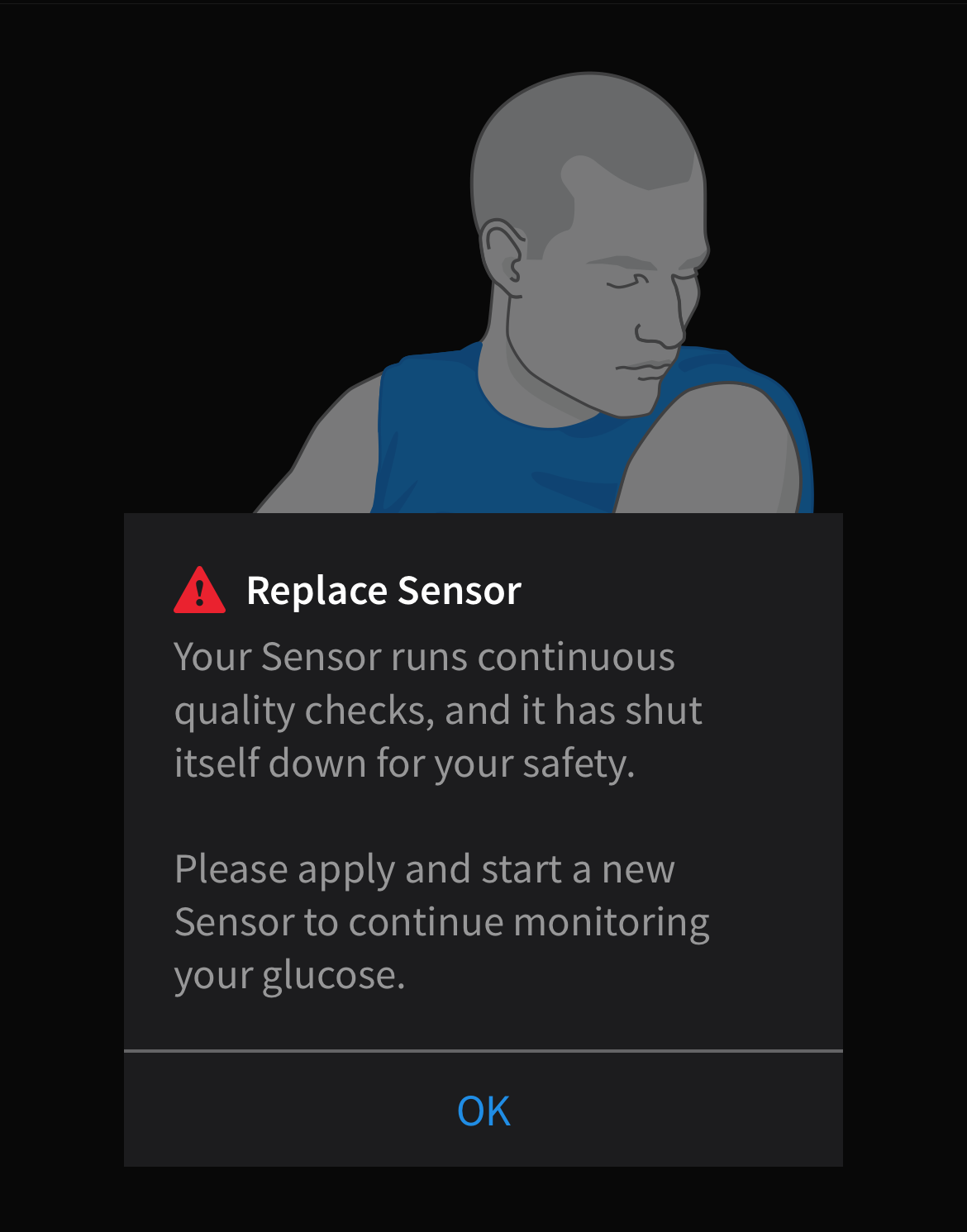
My sensor had stopped working moments before I went to sleep. In a similar way to how I incessantly check apps for notifications (article coming) I’ve been looking at the Freestyle Libre 3+ app a little too much. Which is how I found out that my sensor stopped working last night.
I wanted to check one last time what my numbers were before drifting off to sleep (far too late for my 6 am wake-up), but I’d lost connection to the monitor. I followed the app (and every IT professional’s) suggestion of turning my phone on and off to no avail, before receiving the dreaded message you see above.
I didn’t think it would fix overnight, but I’d not long sent off my stats for the day and it was getting on for midnight. Sure enough, it still wasn’t working this morning. Which was just another weight added to the desire to not head to Run N Rave at 7 am. But I’ve been 18 weeks in a row… I can’t break that streak now.
The run felt awful, I had super low energy and contemplated not participating in the workout afterwards, but didn’t want to set a bad example. Very aware of the fact that I have a 20km workout with tempo efforts this evening, it was hard to enjoy this morning’s run. Especially, knowing that I would be heading into the office, instead of staying and working in the coworking space surrounded by friends.
Nonetheless, I will continue to log my activity + meals until I hear an update from my new master 🫡
So we went ahead with our initial meeting on Saturday. The continuous glucose monitor never ended up working again, so as of Thursday I am still without a CGM. Though I did receive a load of recommendations for nutrition which I took with me to the supermarket at lunchtime, ready for the arrival of another one tomorrow.
The initial findings shared were:
My glucose levels show a bit of fluctuation (in healthy ranges) on some days throughout the day, likely influenced by food intake.
A noticeable drop in glucose levels after completing interval sessions.
Some initial recommendations are:
Consider incorporating more low-glycemic carbohydrates into my meals to help stabilise glucose levels throughout the day.
If my glucose drops significantly after an interval session, consuming ~1g of carbohydrates per kg of body weight post-training could help replenish glycogen stores and maintain stable energy levels.
Alongside these, I received a selection of favourable low-GI, high-carbohydrate foods for endurance training that fit with my vegan diet.
I am excited to receive another CGM tomorrow and see the impact that these recommendations have on my training. I have already started to enhance my diet.
Stay tuned to see if we prove this hypothesis to be true 🔮
Super interesting Paddy!! I will be on the look out of CGM studies in Melb. Hopefully yours is back up and running soon :-)